The $40K Advantage: Redefining Global Manufacturing ROI Through Native AI Vision
2026 / 05 / 10

The $40K Advantage: Redefining Global Manufacturing ROI Through Native AI Vision

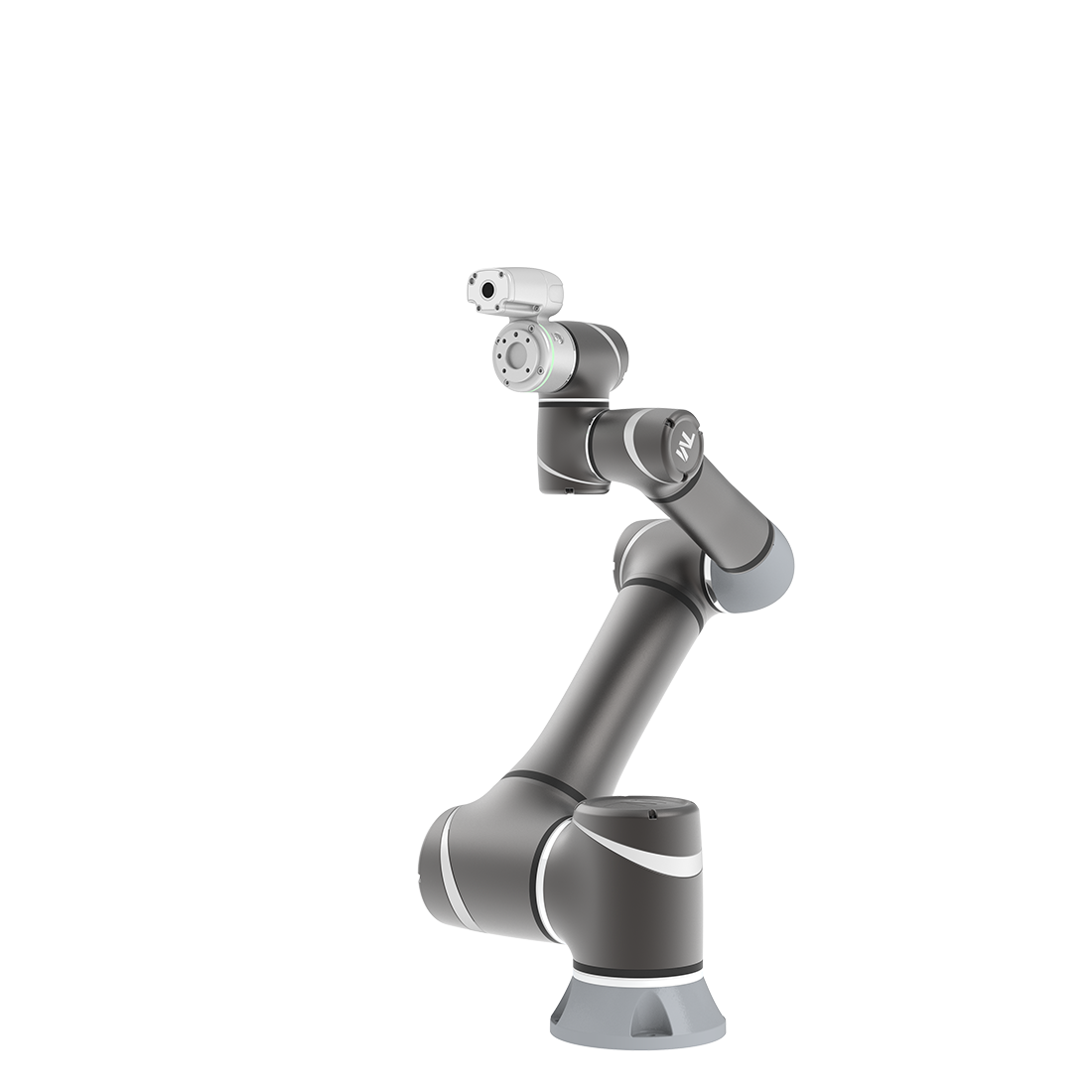
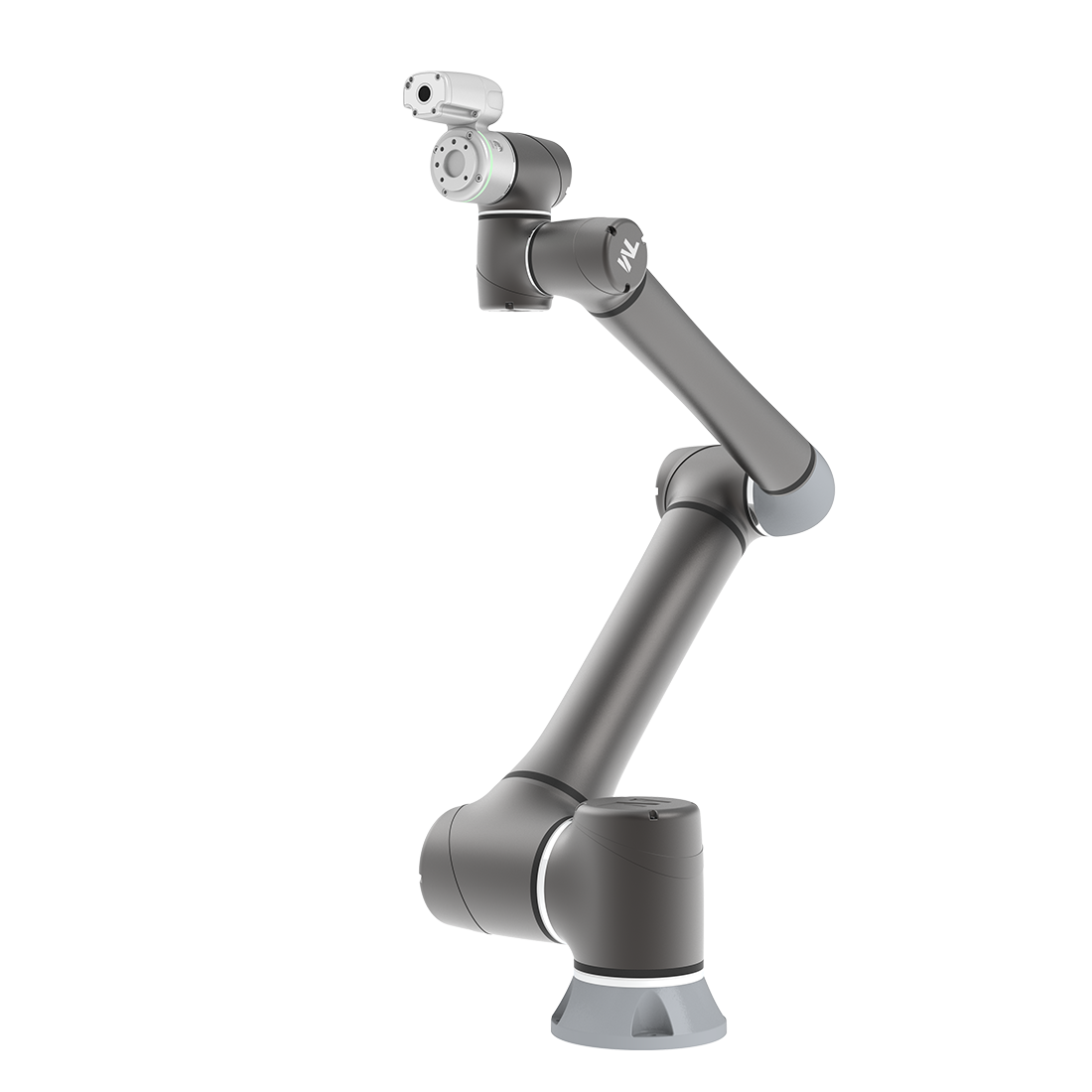
In today’s volatile global market, automation is no longer optional—it is a survival mechanism for international production facilities. However, as manufacturers scale, many fall into the "Hidden Cost Trap" of collaborative robot integration. While base cobot prices remain competitive, the fragmented nature of traditional vision—requiring external hardware and specialized labor—is artificially inflating the Total Cost of Ownership (TCO) and delaying ROI.The Hidden Bottlenecks in Standard CobotFragmented Hardware: Third-party cameras and IPCs create compatibility risks and increase maintenance overhead.Escalating Engineering Costs: Relying on scarce, high-cost specialized labor for hand-eye calibration across different regions.Rigid Software Ecosystems: Costly recurring licenses for vision platforms that don't speak the robot's language.Production Downtime: Manual recalibration during line changeovers that eats into your global OEE."We lose too much efficiency trying to integrate complex AI vision into standard cobots. I want an all-in-one solution: quick changeovers, zero integration headaches, and exactly one vendor to deal with."— Electronics Manufacturing Services (EMS) ProviderTechman Robot eliminates the integration bottleneck through Built-in AI VisionTechman Robot shifts the paradigm from fragmented integration projects to instant, intelligent deployment. Discover how our built-in vision system can save you over $40,000 per station compared to traditional, "blind" cobot installations.The True Cost of Standard Cobots vs. TM AI Cobot TCO & ROI CalculatorSee exactly how much budget you lose to external vision hardware. Compare a standard cobot setup directly against TM AI Cobot’s all-in-one solution to reveal your true TCO.Deployments (Units) Planned number of robotic stations globally.Est. Hardware & Licensing--Global average for external vision hardware and IPCs.Est. Setup & Changeover--Est. based on 1 engineer. (Trad: 1-2 months vs. TM: <1 week). Traditional SetupUSD $--Total Integration & MaintenanceHardware & Controllers: $$$,$$$System & AI Licensing: $$$,$$$Integration Labor & Setup: (Force torque sensor, 1-2 months)$$$,$$$Line Changeover Loss: $$$,$$$VSTM AI CobotUSD $--Native Vision + Instant SetupHardware & Controllers: $0System & AI Licensing: (Add-on AI Software Optional)$0Integration Labor & Setup: (Force torque sensor, <1 week)$$$,$$$Line Changeover Loss: $$$,$$$ Your Potential Savings (USD)$ -- - $ --🔒 Unlock Full Financial BreakdownProvide your details to receive the complete whitepaper and TCO analysis report. Select Country / Region United States Taiwan Germany Japan South Korea China Canada Mexico United Kingdom France Italy Southeast Asia Other (Please specify) Download "The $40K Advantage"Thank You!Your document is ready for download.  #tm-roi-master-container { width: 100% !important; max-width: 100% !important; box-sizing: border-box !important; font-family: 'Inter', sans-serif !important; color: #cbd5e1 !important; line-height: 1.7 !important; display: block !important; } #tm-roi-master-container * { box-sizing: border-box !important; } /* 文章區塊樣式 */ .tm-content-section h2 { color: #ffffff !important; font-weight: 800 !important; font-size: 2.5rem !important; margin: 4rem 0 1.5rem 0 !important; letter-spacing: -0.02em !important; } .tm-content-section h3 { color: #ffffff !important; font-weight: 800 !important; font-size: 1.8rem !important; margin: 3rem 0 1.2rem 0 !important; } .tm-content-section p { font-size: 1.15rem !important; line-height: 1.8 !important; margin-bottom: 2rem !important; } .tm-content-section ul { padding-left: 24px !important; margin-bottom: 2.5rem !important; } .tm-content-section li { font-size: 1.15rem !important; line-height: 1.8 !important; margin-bottom: 0.8rem !important; color: #cbd5e1 !important; } .tm-content-section li strong { color: #ffffff !important; font-size: 1.2rem !important; } .quote-block { border-left: 6px solid #78be21 !important; background: rgba(255, 255, 255, 0.05) !important; padding: 2.5rem !important; margin: 4rem 0 !important; border-radius: 0 12px 12px 0 !important; } .quote-text { font-style: italic !important; font-size: 1.4rem !important; color: #f8fafc !important; margin-bottom: 1rem !important; } .quote-author { font-size: 1rem !important; color: #94a3b8 !important; font-weight: 700 !important; text-transform: uppercase !important; } .custom-divider { border: 0 !important; height: 2px !important; background: linear-gradient(to right, #78be21, #334155, transparent) !important; margin: 5rem 0 !important; } /* 計算機區塊樣式 */ .calc-wrapper { background: transparent !important; width: 100% !important; text-align: center !important; } .input-section { display: grid !important; grid-template-columns: repeat(auto-fit, minmax(280px, 1fr)) !important; gap: 30px !important; padding-bottom: 40px !important; } .tm-input-card { background: #f1f5f9 !important; padding: 25px !important; border-radius: 16px !important; border: 1px solid #e2e8f0 !important; text-align: left !important; } .tm-input-header { display: flex !important; align-items: center !important; height: 3.5rem !important; color: #1e293b !important; font-weight: 800 !important; font-size: 1.15rem !important; } .tm-input-group { display: flex !important; align-items: center !important; gap: 15px !important; margin-bottom: 15px !important; } .tm-number-input { border-radius: 10px !important; border: 2px solid #cbd5e1 !important; font-size: 1.25rem !important; padding: 10px !important; width: 80px !important; text-align: center !important; font-weight: 700 !important; color: #0f172a !important; } .tm-range-slider { flex-grow: 1 !important; height: 10px !important; border-radius: 5px !important; background: #cbd5e1 !important; outline: none !important; -webkit-appearance: none !important; } .tm-range-slider::-webkit-slider-thumb { -webkit-appearance: none !important; width: 26px !important; height: 26px !important; border-radius: 50% !important; background: #78be21 !important; cursor: pointer; border: 3px solid white !important; } .tm-input-helper { font-size: 0.85rem !important; color: #64748b !important; line-height: 1.4 !important; } .tm-calculated-display { font-size: 1.25rem !important; font-weight: 800 !important; color: #0f172a !important; background: #e2e8f0 !important; padding: 12px !important; border-radius: 10px !important; width: 100% !important; text-align: center !important; border: 2px dashed #cbd5e1 !important; } /* 對比卡片樣式 */ .tm-comparison-grid { display: flex !important; align-items: stretch !important; justify-content: center !important; gap: 30px !important; position: relative !important; flex-wrap: wrap !important; margin-bottom: 40px !important; } .tm-comp-card { flex: 1 1 300px !important; max-width: 450px !important; padding: 35px 25px !important; border-radius: 20px !important; background: #fff !important; text-align: center !important; } .tm-comp-card.traditional { border: 2px solid #e2e8f0 !important; } .tm-comp-card.tm-ai { border: 2px solid #78be21 !important; position: relative !important; overflow: hidden !important; } .tm-comp-card.tm-ai::before { content: '' !important; position: absolute !important; top: 0 !important; left: 0 !important; width: 100% !important; height: 6px !important; background: linear-gradient(to right, #a3e635, #78be21) !important; } .tm-comp-tag { font-size: 0.95rem !important; font-weight: 800 !important; text-transform: uppercase !important; margin-bottom: 15px !important; color: #64748b !important; } .tm-ai .tm-comp-tag { color: #78be21 !important; } .tm-comp-cost { display: flex !important; align-items: baseline !important; justify-content: center !important; gap: 4px !important; margin-bottom: 10px !important; } .tm-currency-symbol { font-size: 1.4rem !important; font-weight: 800 !important; color: #1e293b !important; } .tm-ai .tm-currency-symbol { color: #78be21 !important; } .tm-main-number { font-size: 3.5rem !important; font-weight: 900 !important; color: #1e293b !important; line-height: 1.1 !important; } .tm-ai .tm-main-number { color: #78be21 !important; } .range-format { font-size: 2.2rem !important; } .tm-breakdown-list { list-style: none !important; padding: 20px 0 0 0 !important; border-top: 1px dashed #e2e8f0 !important; text-align: left !important; } .tm-breakdown-list li { display: flex !important; justify-content: space-between !important; align-items: center !important; margin-bottom: 12px !important; font-size: 0.95rem !important; color: #475569 !important; } .cost-high { color: #dc2626 !important; font-weight: 800 !important; } .cost-low { color: #78be21 !important; font-weight: 800 !important; } .blur-secret { filter: blur(5px) !important; opacity: 0.5 !important; user-select: none !important; pointer-events: none !important; } .tm-vs-circle { width: 50px !important; height: 50px !important; background: #0f172a !important; color: #fff !important; border-radius: 50% !important; display: flex !important; align-items: center !important; justify-content: center !important; font-weight: 900 !important; position: absolute !important; top: 50% !important; left: 50% !important; transform: translate(-50%, -50%) !important; z-index: 2 !important; border: 5px solid #1e293b !important; } /* 儲蓄金額區塊 */ .tm-premium-savings-container { display: flex !important; align-items: flex-end !important; justify-content: center !important; gap: 5px !important; } .tm-savings-currency, .tm-savings-range-sep { font-size: 2.5rem !important; font-weight: 900 !important; color: #78be21 !important; } .tm-premium-savings { font-weight: 900 !important; background: linear-gradient(135deg, #78be21 0%, #005587 100%) !important; -webkit-background-clip: text !important; -webkit-text-fill-color: transparent !important; font-size: 3.5rem !important; } /* 表單區塊樣式 */ .teaser-box { background: white !important; border: 1px solid #e2e8f0 !important; border-radius: 16px !important; padding: 40px !important; margin: 0 auto !important; max-width: 650px !important; box-shadow: 0 20px 40px rgba(0,0,0,0.2) !important; text-align: center !important; } .tm-form-grid { display: grid !important; grid-template-columns: 1fr 1fr !important; gap: 15px !important; text-align: left !important; } .tm-form-grid input, .tm-form-grid select { width: 100% !important; padding: 12px 15px !important; border-radius: 8px !important; border: 1px solid #cbd5e1 !important; font-size: 1rem !important; color: #0f172a !important; background: #f8fafc !important; } .cta-button { background: #005587 !important; color: white !important; padding: 20px 40px !important; border-radius: 12px !important; font-size: 1.25rem !important; font-weight: 800 !important; transition: all 0.3s !important; border: none !important; cursor: pointer !important; } .cta-button:hover { background: #003d61 !important; transform: scale(1.02) !important; } @keyframes crownFloat { 0%, 100% { transform: translateY(0) rotate(-5deg); } 50% { transform: translateY(-4px) rotate(5deg); } } @media (max-width: 850px) { .tm-comparison-grid { flex-direction: column !important; } .tm-vs-circle { position: relative !important; margin: -15px auto !important; transform: none !important; left: 0 !important; top: 0 !important; } .tm-form-grid { grid-template-columns: 1fr !important; } } (function() { var tmCalcInitDone = false; function executeTMRoiCalculation() { var inputRobots = document.getElementById('tm_ext_robots'); if(!inputRobots) return; var robots = parseFloat(inputRobots.value) || 1; // 傳統方案單台成本 (定案版數據) var tradHwSwMin = 13000; var tradHwSwMax = 23000; var tradSetupMin = 20000; var tradSetupMax = 30000; // TM 方案單台成本 var tmTotalBase = 4000; // 運算總額 var totalTradMin = (tradHwSwMin + tradSetupMin) * robots; var totalTradMax = (tradHwSwMax + tradSetupMax) * robots; var totalTM = tmTotalBase * robots; // 渲染介面 document.getElementById('display_vision_cost').innerText = 'USD $' + (tradHwSwMin * robots).toLocaleString() + ' - $' + (tradHwSwMax * robots).toLocaleString(); document.getElementById('display_setup_cost').innerText = 'USD $' + (tradSetupMin * robots).toLocaleString() + ' - $' + (tradSetupMax * robots).toLocaleString(); document.getElementById('cost_trad').innerText = totalTradMin.toLocaleString() + ' - $' + totalTradMax.toLocaleString(); document.getElementById('cost_tm').innerText = totalTM.toLocaleString(); document.getElementById('tm_savings_low').innerText = (totalTradMin - totalTM).toLocaleString(); document.getElementById('tm_savings_high').innerText = (totalTradMax - totalTM).toLocaleString(); } function setupTMCalculator() { if (tmCalcInitDone) return; var s = document.getElementById('slide_robots'), i = document.getElementById('tm_ext_robots'); if (!s || !i) return; s.addEventListener('input', function() { i.value = s.value; executeTMRoiCalculation(); }); i.addEventListener('input', function() { s.value = i.value; executeTMRoiCalculation(); }); var cs = document.getElementById('lead_country'), co = document.getElementById('lead_country_other'); if(cs && co) { cs.addEventListener('change', function() { co.style.display = (this.value === 'Other') ? 'block' : 'none'; co.required = (this.value === 'Other'); }); } var lf = document.getElementById('tm-lead-form'); if(lf) { lf.addEventListener('submit', function(e) { e.preventDefault(); var now = new Date(); var timeString = now.getFullYear() + '/' + String(now.getMonth() + 1).padStart(2, '0') + '/' + String(now.getDate()).padStart(2, '0') + ' ' + String(now.getHours()).padStart(2, '0') + ':' + String(now.getMinutes()).padStart(2, '0') + ':' + String(now.getSeconds()).padStart(2, '0'); var selectedCountry = document.getElementById('lead_country').value; var finalCountry = (selectedCountry === 'Other') ? document.getElementById('lead_country_other').value : selectedCountry; const formData = { submitTime: timeString, name: document.getElementById('lead_name').value, company: document.getElementById('lead_company').value, email: document.getElementById('lead_email').value, country: finalCountry }; const scriptURL = 'https://script.google.com/macros/s/AKfycbxZLdjQVYxyEsYzRQj-m_fEdHXh25QPqk6p9SsPPE77jH22DYPXlBW8JnZ7xZ1NisSc/exec'; var btn = this.querySelector('.cta-button'); btn.innerText = 'Processing...'; fetch(scriptURL, { method: 'POST', mode: 'no-cors', headers: { 'Content-Type': 'application/json' }, body: JSON.stringify(formData) }).then(() => { // 隱藏表單,顯示成功訊息 document.getElementById('tm-lead-form').style.display = 'none'; document.getElementById('tm-form-success').style.display = 'block'; var pdfUrl = 'https://tmweb.blob.core.windows.net/triweb/triweb/BDCFile/BDC%20Test%20File.pdf'; window.open(pdfUrl, '_blank'); // 🟢 改用 GTM dataLayer 推送事件 window.dataLayer = window.dataLayer || []; window.dataLayer.push({ 'event': 'download_40k_whitepaper', 'event_category': 'Whitepaper_Lead', 'lead_country': finalCountry }); console.log('✅ 成功:事件已推送至 GTM dataLayer (download_40k_whitepaper)'); }).catch(error => { // 【修復】加回錯誤處理區塊 console.error('Error!', error.message); btn.innerText = 'Error! Try Again.'; }); }); // 【修復】這裡原本被刪掉了,補回關閉事件監聽器的括號 } tmCalcInitDone = true; executeTMRoiCalculation(); } var tmWatchdogTimer = setInterval(function() { if (tmCalcInitDone) { clearInterval(tmWatchdogTimer); } else { setupTMCalculator(); } }, 300); })();

Eliminating Manual Calibration: Seamless Pick-and-Place Replication for AMRs
2026 / 04 / 30

Eliminating Manual Calibration: Seamless Pick-and-Place Replication for AMRs

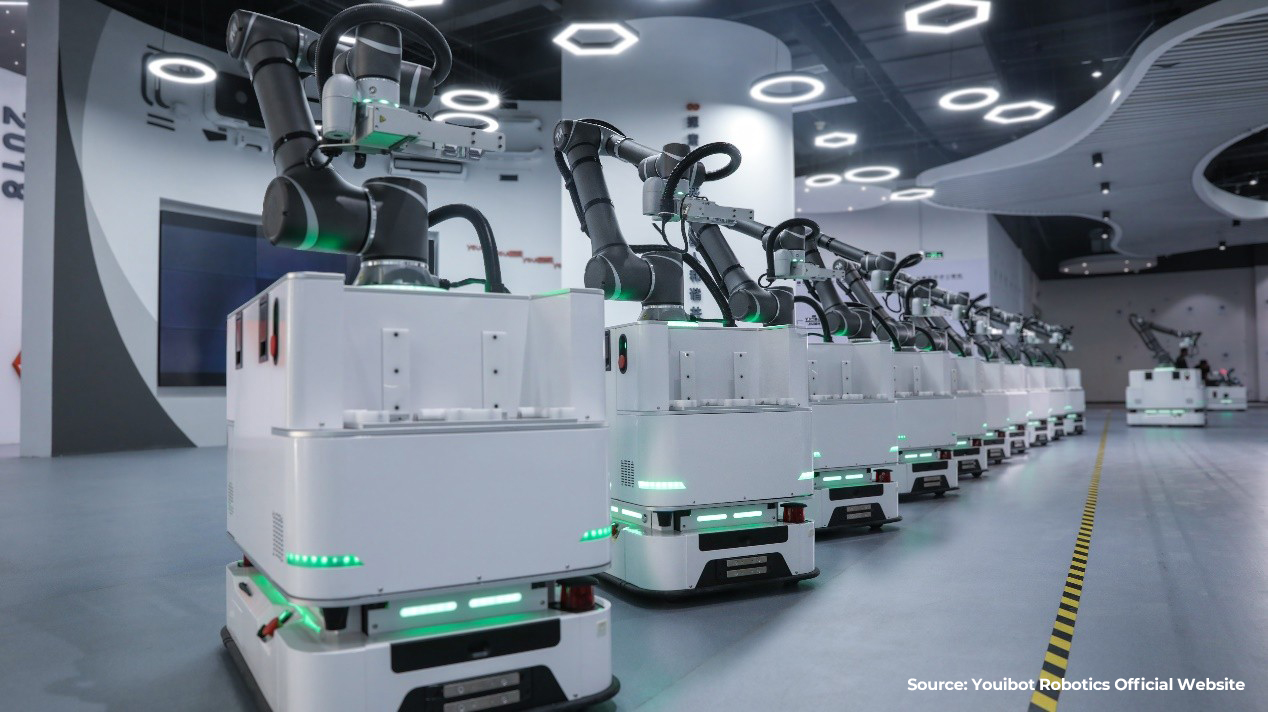
Background and Customer Requirements In applications where Autonomous Mobile Robots (AMR) are integrated with robotic arms, systems typically use TM Landmarks—attached to each slot of a multi-layer material rack (E-Rack)—as positioning benchmarks. Engineers use these Landmarks as a base to teach the robotic arm how to precisely pick and place materials (FOUP) in each slot. Ideally, once a pick-and-place motion is taught for one slot, it should be applicable to all other slots on the rack. Challenges Reality is often more complex. As a robotic arm moves to different positions, it inherently generates non-linear errors. Furthermore, the Landmarks attached to each slot are rarely 100% consistent in their actual physical position or tilt angle. These minute deviations result in physical offsets when the robotic arm moves to a designated location. In severe cases, this can lead to collisions or interference. To compensate for these errors, system integrators previously had to manually fine-tune every single slot—a process that was extremely time-consuming and labor-intensive. The Solution Techman Robot has introduced an ingenious Intelligent Cloning Workflow solution. Instead of manual fine-tuning, engineers introduce a specialized Jig that also features a Landmark. Engineers only need to teach the robotic arm the "perfect" pick-and-place point on this Jig once. Subsequently, the robotic arm uses its built-in smart vision to capture images of both the original slot's Landmark and the Jig’s Landmark. The system automatically calculates the relative relationship between the two, allowing the pick-and-place coordinates to be seamlessly transferred from the Jig to the next slot without any manual re-teaching.  Results and Benefits This solution controls pick-and-place errors within a precise range of ±1mm while significantly reducing time costs. Consider a factory with 100 slots: traditional manual tuning for each slot would take 10 minutes, totaling 1,000 minutes. With the Intelligent Cloning Workflow, initial teaching takes only 10 minutes, and each of the remaining 99 slots requires only 1 minute for the robot to perform vision recognition. Total deployment time drops from 1,000 minutes to just 110 minutes—a 90% reduction in time—while also drastically lowering the risk of human error. Conclusion The Intelligent Cloning Workflow successfully replaces the labor-intensive manual commissioning of the past. When faced with complex tasks involving multiple slots at the same station, enterprises can finally achieve rapid motion replication and precision deployment with ease.

Automating Airbag Yarn Quality Control with AI Defect Detection
2026 / 01 / 28

Automating Airbag Yarn Quality Control with AI Defect Detection

Background and Customer Needs A leading manufacturer in the thread roll industry, recognized for its diverse applications in industrial, sports, and fishing sectors, has initiated a strategic project to enhance the quality control of its airbag yarn production. The primary goal is to upgrade their inspection processes to meet the rigorous safety standards required for automotive components. Challenges Inspecting thread rolls presents unique visual complexities that make traditional rules-based vision difficult:Diverse Defect Types: The morphology of the "fuzz" defects varies significantly, requiring a flexible detection system capable of learning multiple defect forms.High Visual Noise: The texture of the wound yarn creates a noisy background. Without advanced processing, standard vision systems easily confuse the normal yarn winding with actual defects.Depth of Field and Focus: Because the camera inspects the side of a cylindrical roll, defects located at the curvature's edge often appear blurry or out of focus, leading to potential missed detections.Ambiguous Labeling: There were discrepancies between human annotators and AI predictions regarding the precise area of a defect, making it difficult to establish a "perfect" ground truth. Solution To address these challenges, a Proof of Concept was established using Techman Robot’s AI capabilities integrated with high-end vision hardware.The inspection setup included:Vision Hardware: A Basler acA2500-14gm camera paired with an OPTART 25mm fixed focus lens and a CCS LDR2-50SW2-JD light source.Configuration: The system was set up with an object distance of 30cm, capturing images of the sides of the yarn rolls.Mechanism Strategy: To solve the focus issues caused by the roll's curvature, the evaluation concluded that a rotating mechanism is necessary to bring defects into the focal plane for accurate detection.  AI Model Training The project utilized TM AI+ (Version 2.22.1700) to create a robust defect detection model.Dataset Composition: The model was trained on 98 images to capture the wide variety of defect shapes, with 17 images reserved for testing.Labeling: The team annotated defects (NG) across the dataset. The initial training involved 59 labeled instances.Continuous Improvement: Due to the high variance in defect appearance, the validation loss was difficult to minimize initially. The team identified "Auto AI Training" as a crucial feature to automatically collect negative samples and strengthen the model against false positives. Results & Benefits The evaluation in the TM laboratory environment demonstrated the feasibility of the AI solution:Effective Detection: The TM AI system successfully detected defects in the controlled lab environment.Addressed False Positives: Despite the noisy texture of the yarn, the AI was able to distinguish between the yarn winding and actual fuzz defects.Clarified Mechanical Requirements: The testing revealed that static imaging leads to missed detections due to blur (3 misses out of 59 labels in one test set). The analysis confirmed that implementing a rotating mechanism to ensure defects are focused would resolve these misses.Scalability via Auto AI: To handle the "infinite" variety of fuzz shapes, the team recommended implementing Auto AI Training to continuously refine the model and reduce ambiguity between human and AI judgment. Conclusion This evaluation for customers proves that AI inspection can overcome the difficulties of detecting subtle defects on complex textures like airbag yarn. While environmental factors like lighting and focus are critical, the combination of TM AI+ Trainer and proper mechanical design ensures a reliable automated quality control process. By adopting Auto AI Training, the system is future-proofed to adapt to new defect variations, ensuring long-term consistency and quality.

AI Vision Cobot Solves 7kg Aluminum Ingot Handling Challenge
2026 / 01 / 05

AI Vision Cobot Solves 7kg Aluminum Ingot Handling Challenge

Background and Customer Needs An internationally renowned motorcycle manufacturer faced significant hurdles in the raw material handling section of their casting process. The line required processing aluminum ingots stacked 21 layers high, with each long ingot weighing 7kg. The client urgently sought an automated solution integrating robotic arms and AI vision to replace manual labor, aiming to resolve high labor costs and improve positioning accuracy. Challenges Labor Intensity & Injury Risk:Repetitive lifting of 7kg loads and constant bending posed severe occupational injury risks, compounded by a labor shortage.Field of View (FOV) Limitations:Due to the extended length of the ingots, a standard camera lens could not capture the entire object in a single frame at close range.Complex Stacking:The ingots were stacked in an alternating pattern across 21 layers with reflective surfaces, making depth and position detection difficult for traditional vision systems.Cost Constraints:The client sought a cost-effective alternative to expensive 3D camera systems. Solution We deployed a high-performance AI vision solution that leveraged software capabilities to overcome hardware limitations:AI Instance Segmentation (2D over 3D):Instead of costly 3D cameras, we utilized AI Instance Segmentation technology. Through deep learning, the system accurately identifies the contours and layers of stacked ingots using standard 2D imaging, significantly reducing hardware costs.Proprietary Positioning Algorithm:To address the FOV limitation, we developed a specialized algorithm that detects the "top" and "bottom" ends of the long ingot separately. The system then automatically calculates the center coordinates, ensuring the robotic arm grips the center of gravity with precision.  Results & Benefits Enhanced Productivity:A single robotic arm now supports a workspace covering four pallets, achieving a handling rate of 100 ingots per hour.Cost-Effective Deployment:By replacing expensive hardware with advanced AI algorithms, the client realized substantial savings on equipment investment.Zero-Injury Workplace:Automation has completely taken over heavy lifting, eliminating the risk of occupational injuries caused by long-term bending and load-bearing, creating a safer environment for employees. Conclusion This case study demonstrates how advanced AI software can effectively overcome physical hardware limitations. Through precise algorithms and a cost-effective 2D vision solution, we not only solved the complex challenge of aluminum ingot handling but also helped the client achieve a win-win situation in both production efficiency and workplace safety within their casting process.

Enhancing Server Quality with AI Inspection Before Shipment
2025 / 10 / 22

Enhancing Server Quality with AI Inspection Before Shipment

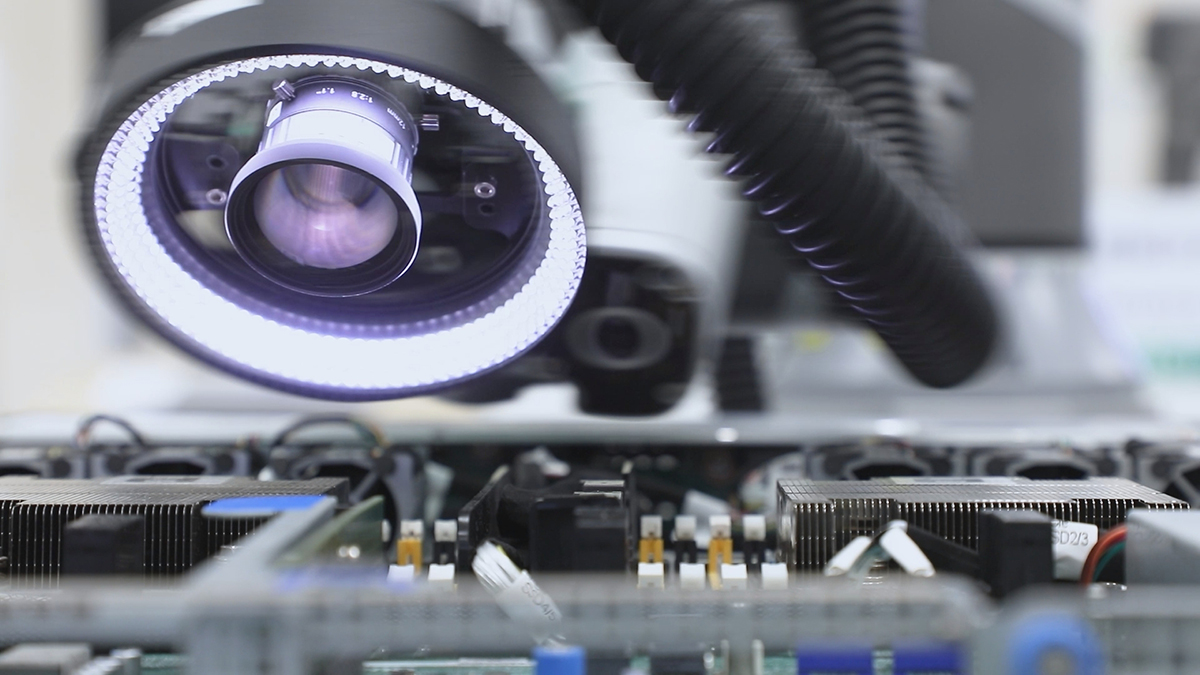
Background and Customer Needs Our client, a well-known electronics manufacturer in Taiwan, specializes in high-volume server production. In the final stage before shipment, every unit must undergo visual inspection to verify the presence, positioning, and condition of key components—such as connectors, cable ties, caps, battery, cable routing, SSDs, and screws.Previously, this process relied heavily on manual inspection, which was not only time-consuming but also inconsistent due to worker fatigue. The increasing complexity of server configurations further amplified the risk of undetected defects, quality variations, and costly rework.The customer required a reliable and scalable inspection system that could:Perform consistent visual checks across multiple component typesReduce human error and inspection timeEnsure stable quality before delivery Challenges Although SOPs were in place, the manual inspection process faced the following key challenges:Fatigue-related errors: Human inspectors often missed subtle issues, especially during long shifts.Lack of consistency: Judgment varied between operators, impacting quality stability.Non-traceable process: No systematic method existed to record or trace inspection outcomes.Complexity of components: The wide range of parts and configurations made visual checking difficult to standardize.These issues underscore the need for an automated solution that could ensure repeatable accuracy and reduce dependence on manual labor. Solution To improve inspection performance, the manufacturer implemented a robotic arm solution using the TM AI Cobot, which is integrated with a built-in vision system, and a powerful software called TM AI+ Trainer. Inspection Process: The AI model was trained using image datasets labeled as “OK” and “NG” based on multiple server component samples.After capturing an image of the server, the AI model classifies each area (e.g., connector, battery, cable tie) to determine whether the part is present, correct, or abnormal.If an abnormality (NG) is detected, the system immediately flags the unit and removes it from the line for further handling. Key Inspection Targets: Connector, cap, and cable tie detectionBattery presence and cable routingSSD and screw presence verification AI Model Training AI Function Used: ClassificationData Source: Labeled images captured directly from productionTraining Method: Standard supervised training with categorized image sets  Results & Benefits Parallel multi-point detection: Simultaneous inspection of multiple parts reduced cycle timeHigher consistency: AI provided uniform inspection judgment regardless of shift or operatorImproved traceability: All inspection results were recorded digitally for tracking and QA analysisReduced rework and after-sales risk: Only qualified servers proceed to shipment Conclusion With TM AI Cobot as an automated inspection solution, the customer successfully replaced time-intensive manual checks with a reliable AI-powered system. This not only enhanced inspection efficiency and traceability but also ensured higher product quality at the final stage—reinforcing trust in the company’s server manufacturing excellence.

Enhancing Food Packaging Safety with AI Inspection for Plastic Top-Seal
2025 / 10 / 03

Enhancing Food Packaging Safety with AI Inspection for Plastic Top-Seal

Background and Customer Needs A major player in Japan’s refrigerated and frozen food manufacturing industry, produces a variety of ready-to-eat salads. One critical stage in their packaging process involves top-sealing, where ensuring no food material is caught in the seal is crucial for food safety, freshness, and compliance with hygiene standards.The customer was facing challenges where food materials were occasionally trapped in the sealing area. This posed risks of leakage, contamination, and customer dissatisfaction. They needed a reliable inspection system that could:Detect any food intrusion in the sealed edge of salad packagesMinimize human error in visual inspectionAdapt to different forms and colors of food materialsBe non-intrusive and maintain production efficiency Challenges Despite existing visual inspection procedures, several pain points emerged:Human Limitation: Manual inspection was inconsistent, especially under fatigue or during high throughput.False Negatives: Transparent food materials, such as onions, were difficult to detect visually.Traceability Issues: There was no system to verify if each seal had been properly inspected and logged.These issues emphasized the need for an AI-driven visual inspection system that could automate defect detection without slowing down operations. Solution To address these concerns, Toukatsu Foods introduced an AI-powered inspection system using Techman Robot's collaborative cobot equipped with a built-in vision system.The solution involved:A camera mounted above the conveyor, capturing high-resolution images of each sealed salad packageAn AI classification model trained to detect the presence of foreign materials (e.g., ingredients trapped in the seal)Upon image capture, the AI model instantly evaluated whether any part of the salad intruded into the sealing zone. If detected, the system flagged the package as NG, enabling immediate removal from the line.  AI Model Training AI Function Used: ClassificationDataset Composition:OK Images: Sufficient clean images (no food trapped) captured by the manufacturerNG Images: Examples food materials trapped in the top-sealPreparation Method: Cropping each image into four sealing edges for targeted training Results & Benefits Reduced Human Dependency: Automation minimized fatigue-related errors and ensured inspection consistency across shifts.Real-time Sorting: NG products were instantly flagged and removed from the production flow.Improved Detection Accuracy: Even transparent items like onions were detected with higher consistency than manual inspection.Scalability: The same AI-based logic can be applied to similar food packaging scenarios in the future. Conclusion This successful implementation at Toukatsu Foods demonstrates how AI and cobots can transform quality assurance in food manufacturing. By automating the detection of sealing defects, the company not only ensured consumer safety but also streamlined their inspection process—proving the value of intelligent automation in the food industry.

Boosting Quality Control with AI Screw Inspection for Speaker Assembly
2025 / 05 / 29

Boosting Quality Control with AI Screw Inspection for Speaker Assembly

Background and Customer Needs Our client specializes in manufacturing high-quality speaker systems. In their speaker assembly lines—covering 8-inch, 12-inch, and 15-inch models—ensuring that every screw is securely fastened is essential for structural integrity and sound performance. However, the manual assembly process occasionally resulted in missing screws, leading to customer complaints, costly rework, and potential damage to the brand’s reputation.The customer was looking for a solution that could:Eliminate screw fastening errors caused by human oversightProvide real-time quality assurance without slowing down the production lineBe quickly trained and deployed to handle different speaker models Challenges Despite well-defined standard operating procedures, they encountered several key challenges on the production floor:Human Error: Manual inspections were inconsistent and prone to oversight, especially during high-volume production.Lack of Traceability: It was difficult to track whether each screw had been properly fastened in real time.Model Variability: Differences in screw locations and quantities across speaker sizes (8", 12", and 15") made a one-size-fits-all inspection approach impractical.These challenges highlighted the urgent need for a robust, automated inspection system that could guarantee 100% fastening verification with minimal setup time. Solution To resolve this issue, the speaker manufacturer implemented TM AI Cobot to automate screw fastening and AI inspection. This solution combines industrial vision with AI to automatically verify whether screws are fully secured during assembly.The inspection workflow starts with a Basler camera mounted above the assembly line, providing an ariel view of the speakers. This camera is integrated with a collaborative robot (cobot), so that once the screws are fastened, the cobot activates the Basler camera to capture an image. The images are analyzed using an AI model that detects and flags any missing or improperly fastened screws. If a non-conforming (NG) product is identified, an alert is automatically triggered to notify the operator.  AI Model Training Training Time: Approximately 3 minutesAI Function Used: AI ClassificationDataset Size: 100 OK images, 67 NG imagesOK Products: Passed inspection and continued to the next production stageNG Products: Flagged for rework, preventing defective units from advancing in the process Results & Benefits Minimized human errorReal-time alerts and automated verificationFast AI model training with high accuracyWith the cobot solution in place, our customer significantly reduced customer complaints and rework caused by missing screws. The solution ensures product quality while streamlining the inspection process.

Automated PCBA Glue Inspection with Collaborative Robot
2025 / 03 / 25

Automated PCBA Glue Inspection with Collaborative Robot

Background and Customer Needs In electronics manufacturing, ensuring precise glue dispensing before the PCBA enters the soldering machine is crucial for product quality. A customer required an automated inspection system to verify the accuracy of glue application, as defects in dispensing could lead to product failures.After the glue is dispensed from the dispensing machine, issues such as incomplete application, leakage, or unintended contact with video memory components may occur, requiring inspection. Previously, the inspection relied on manual monitoring, which was prone to human fatigue, inconsistencies, and a lack of traceable inspection data. Challenges Manual Inspection Limitations: Operators needed to constantly monitor the process, increasing the risk of fatigue and misjudgment.High Staff Turnover: Different inspectors applied varying criteria, making standardization difficult.Lack of Traceability: Manual inspection did not allow for image storage or data tracking, complicating production management. Solution & Key Technologies Techman Robot’s cobot arm provided an automated inspection solution, integrating advanced vision and AI classification technology to ensure precise glue application detection. Effectively solving the above drawbacks and achieving an automated workflow. Imaging & Detection TM AI Cobot were deployed to inspect the glue application on PCBs before the soldering machine processThe cobot arm detected correct and incorrect dispensing, distinguishing between "OK" (properly applied glue) and "NG" (glue missing or misplaced)All images and inspection results were recorded in a database for traceability and process optimization AI Model Training Training Time: Approximately 10 minutesAI Function Used: AI ClassificationDataset Size: 130 OK images, 80 NG images OK Products: Passed inspection and continued to the next production stageNG Products: Flagged for rework, preventing defective units from advancing in the process Performance Inspection Speed: 108 visual tasks completed in just 30 seconds, significantly improving efficiency.Achieved 99.9% inspection accuracyFalse alarm rate of less than 0.1%Overkill rate of less than 0.1% Application Scenarios Automated verification of glue dispensing before the PCBA enters the Soldering machineIdentification of missing or misplaced glue to prevent product defectsReal-time inspection with automated data collection for quality control  Benefits Enhanced Accuracy & Consistency Eliminated human error by automating the inspection process.Achieved 99.9% accuracy with AI classification, ensuring defect-free products. Increased Efficiency Fully automated inspection reduced reliance on manual operators.Processing time was significantly shortened, enhancing production speed. Improved Traceability AI-powered inspection stores all test results and images for quality management.Barcode reading and serial number tracking enabled efficient production monitoring.  Conclusion The cobot successfully transformed PCBA glue dispensing inspection by integrating smart automation, AI-driven classification, and advanced vision technology. This solution not only enhances accuracy and efficiency but also provides valuable traceability data, ensuring higher manufacturing standards and lower operational costs. The case highlights how manufacturers can leverage AI to optimize production lines and maintain superior quality control.

FA FVI Damaged Part Detection for PCBs
2025 / 01 / 17

FA FVI Damaged Part Detection for PCBs

Background and Customer Needs In the fast-paced world of electronics manufacturing, ensuring the quality of products before packaging is critical. A major customer required a solution to detect damaged or missing parts on printed circuit boards (PCBs) with high accuracy and efficiency. Manual inspection methods struggled to keep up with production demands and often overlooked small defects. Challenges Detection of Small Anomalies: Human inspectors found it challenging to consistently identify tiny defects on PCBs.High Volume Production: The need for rapid, scalable inspections to match production cycle times.Labor-Intensive Process: Dependence on manual inspections increased costs and introduced inconsistencies. Solution & Key Technologies Techman Robot’s TM AI Cobot provided a comprehensive automated solution, integrating advanced imaging and AI classification technology.Imaging & DetectionThe Eye-in-Hand (EIH) camera enabled precise positioning and the external camera enabled multi-point visual inspection, performing image capture from multiple angles to ensure every component was inspected accurately.Images were analyzed using the AI model to classify parts as Pass (OK) or Fail (NG).AI Model TrainingLeveraged classification AI to train the system with a dataset of 70 images (40 OK, 30 NG).Training time was minimized to just 15 minutes, enabling quick adaptation to changes in production requirements.Automated WorkflowOK Products: Automatically directed to the next station.NG Products: Identified and the cobot arm will pick out the defective part to a dedicated cycle area for further process.Results were computed on the AOI Edge and then transmitted to the robot, which executes the decision-making to ensure a seamless production flow.  Application Scenarios Detecting missing or damaged parts before packagingEnsuring product quality by identifying small anomalies early in the process Benefits Enhanced AccuracyAchieved an inspection accuracy rate of 99.99%.False alarm and overkill rates were reduced to less than 1%, ensuring reliability.Increased EfficiencyAutomation improved inspection speed and reduced manpower requirements by 50%.High-speed inspection aligned seamlessly with production cycle times.Cost ReductionLower reliance on manual labor minimized operational costs while enhancing consistency. Conclusion The part detection solution using TM AI Cobot demonstrates how smart automation transforms inspection processes. By combining AI-powered classification with precise vision technology, this case exemplifies how manufacturers can achieve unparalleled efficiency, accuracy, and cost savings in modern production lines.