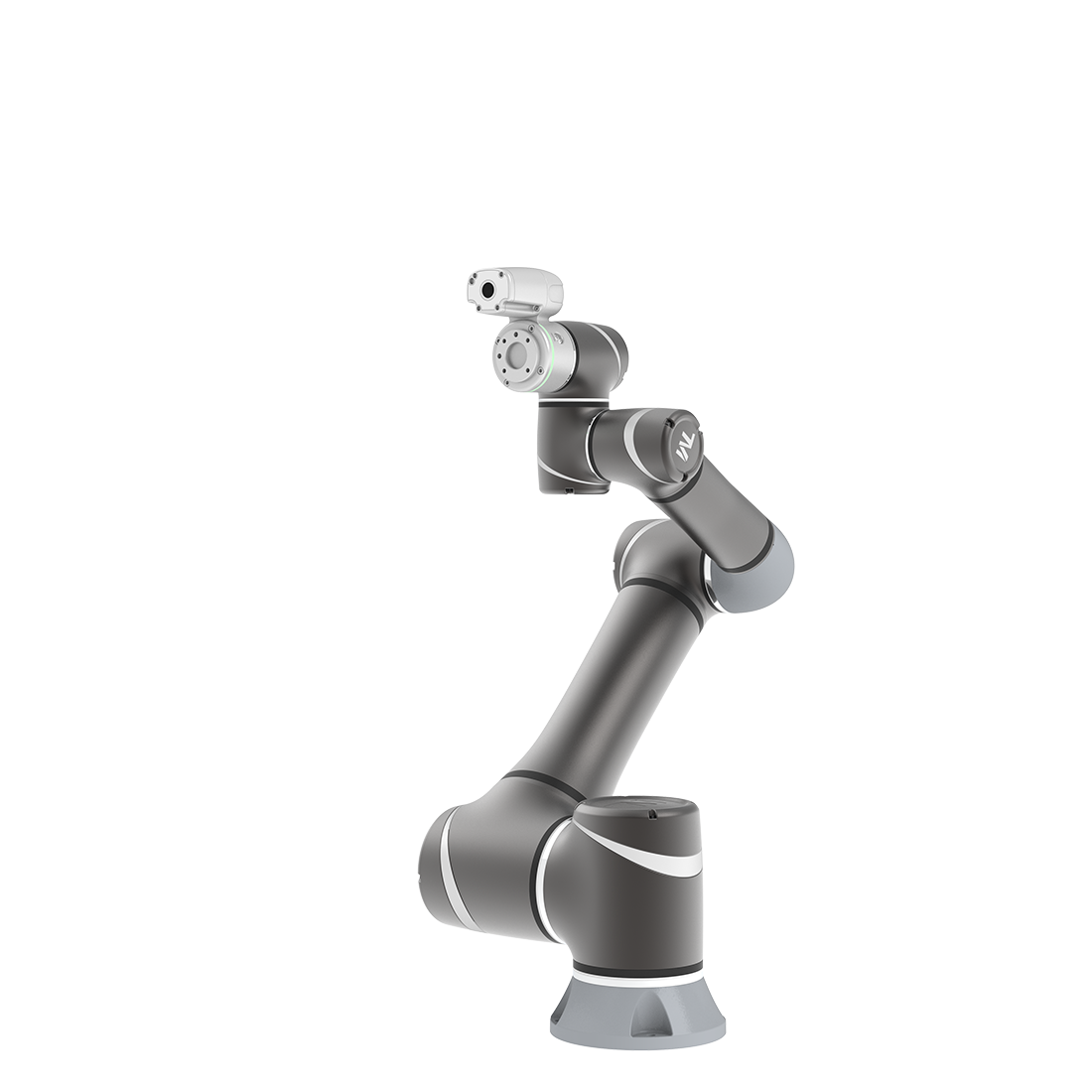
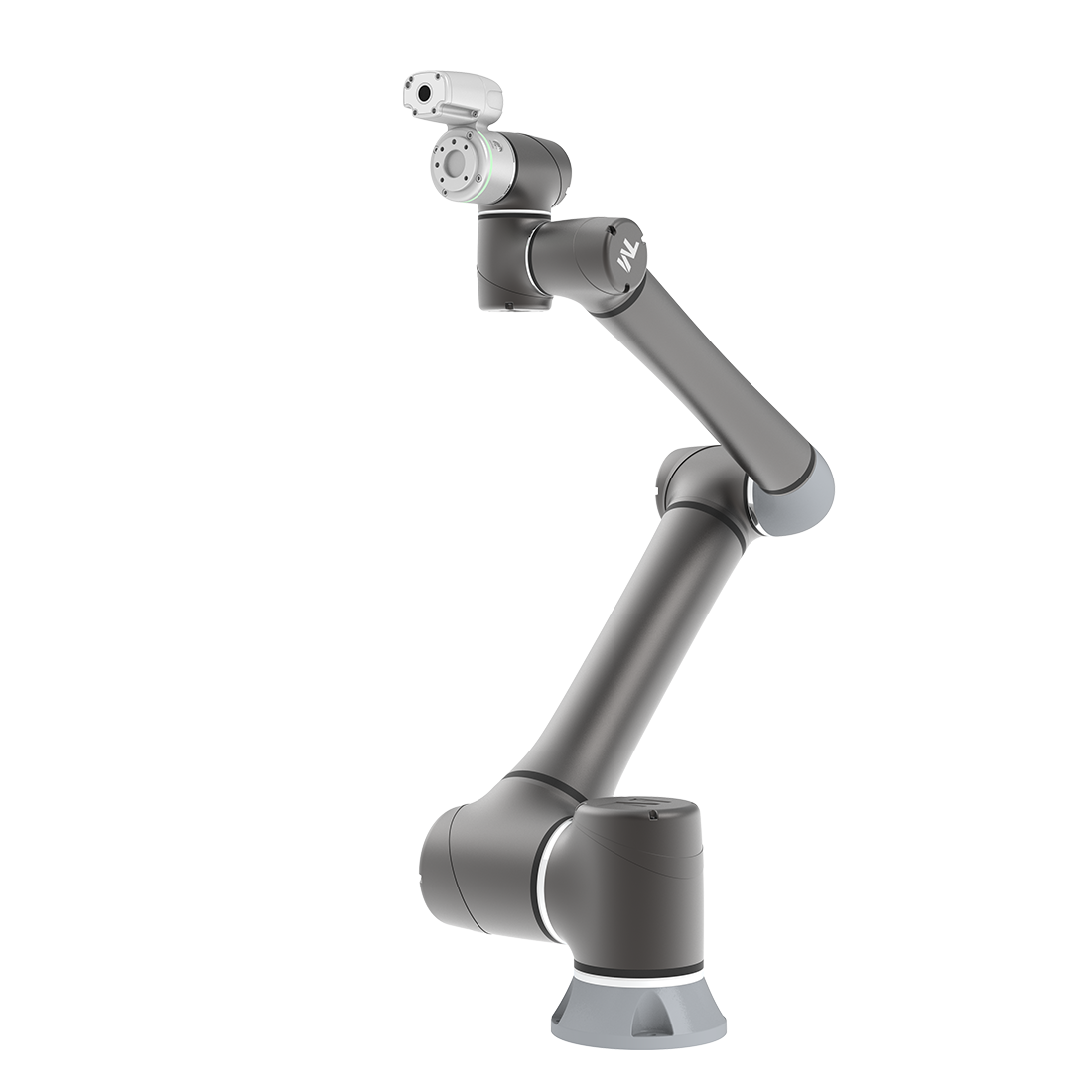
Techman Robot Product Compliance
更新日期 2026 / 10 / 05
TECHMAN ROBOT Product Compliance
for TM AI Cobot S series
| Standard / Regulation | Compliance Specification & Details |
|---|---|
| ISO 10218-1:2011 ISO 13849-1:2023 | ISO 10218-1 establishes guidelines for the safety requirements specific to industrial robots, addressing them as partly completed machinery. This standard is crucial for ensuring inherently safe design, risk reduction measures, and proper information dissemination for using industrial robots. The TM AI Cobot S series with TMflow 2.24 (or above) is fully compliant with ISO 10218-1:2011. TRSS 5.3 (TECHMAN ROBOT Safety System 5.3) possesses ISO 13849-1:2023 certification by TÜV NORD with 35 PL d Cat.3 safety functions. |
| ISO 10218-1:2025 | Highlights in the new version of ISO 10218-1:2025:
The TM AI Cobot S series with TMflow 2.24 (or above) aims to achieve TÜV NORD ISO 10218-1:2025 compliance before the end of 2026. ISO/TS 15066 and Power & Force Limiting (PFL) are considered within the ISO 10218-1:2025 scope. A Normal Stop safety function with a PL b structure is included in TRSS 5.3. TRSS 5.3 possesses ISO 13849-1:2023 certification by TÜV NORD with 35 PL d Cat.3 and 1 PL b Cat.B safety functions. ISO 10218-1:2025 clause 5.1.16 indicates that if the cybersecurity threat assessment identifies that a threat can result in safety risks, cybersecurity measures shall be provided to prevent unauthorized access to the control system of the robot. For cybersecurity assessment and compliance, refer to the following sections. |
| Cyber Resilience Act (CRA) (EU) 2024/2847 | The CRA sets out requirements for product design and management regarding cybersecurity, and also imposes legal constraints on EU manufacturers and distributors as follows:
|
| EU Artificial Intelligence Act (EU AI Act) | TM AI+ Trainer is an AI development platform designed specifically for industrial automation. Its core functionality lies in providing image labeling, model training, and validation tools. This software does not provide or deploy general-purpose AI models; instead, it is used to train task-specific computer vision models for industrial visual inspection. Supported technologies include: image classification, object detection, semantic segmentation, instance segmentation, and anomaly detection. Generated models are primarily used for specific tasks such as automated optical inspection (AOI) and vision-guided localization. TECHMAN ROBOT places great importance on customer data security and intellectual property rights. TM AI+ Trainer supports on-premise model training and deployment. All images, detection data, and generated inference models imported by the customer during training are entirely under the customer's control and will never be transferred or used for training third-party models without authorization. TM AI+ Trainer and its generated industrial vision models, when used for their intended purpose, will not have a significant impact on human health, safety, or fundamental rights. If the model output is used to guide robot movement, pick-and-place, assembly, or positioning correction, the user should conduct a separate risk assessment, motion range limitation, collision avoidance design, and necessary safety verification at the system level. According to the EU AI Act's classification principles, this product falls under the "Minimal Risk" category. |
| EU Machinery Regulation (EU) 2023/1230 | EU Machinery Regulation (EU) 2023/1230 aims to ensure that machinery placed on the market or put into service meets high health and safety protection standards. These standards have been updated to cover cybersecurity and modern technologies, such as artificial intelligence.
The system has undergone rigorous validation against identified cyber threats by systematically mapping the technical cybersecurity controls of IEC 62443-4-1 and IEC 62443-4-2 to the functional safety impact analysis of ISO 10218-1:2025. Consequently, the system completely complies with and has closed all cybersecurity compliance gaps mandated under ISO 10218-1:2025 Clause 5.1.16. |
分享
這篇文章對您有幫助嗎?